
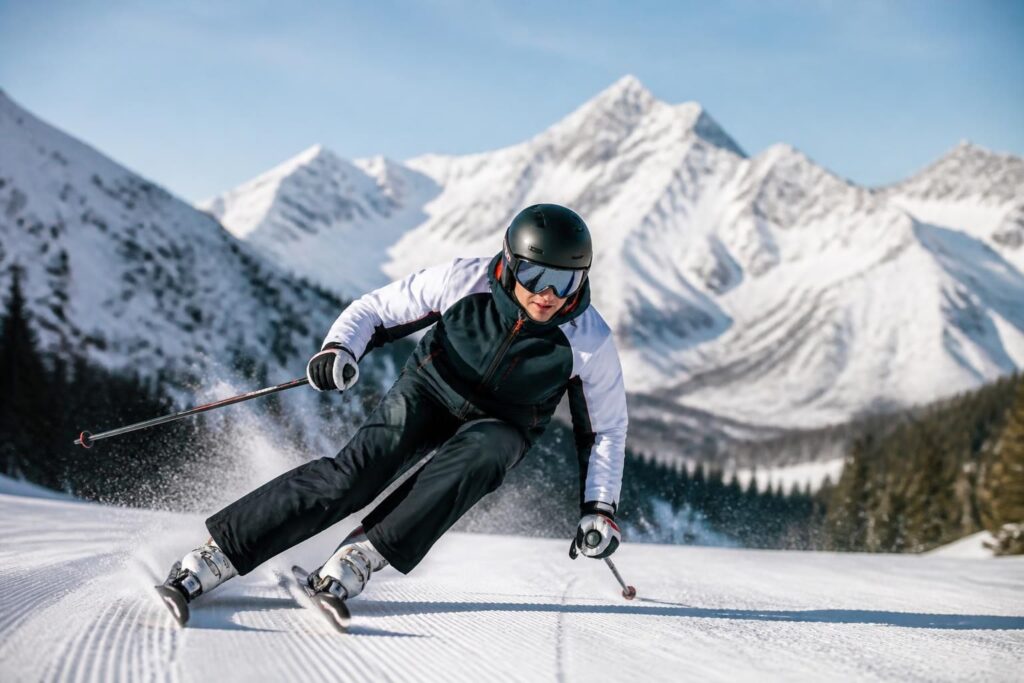
Fresh out of a 45-day immobilization period, the ski cross specialist Evan Klufts announces that the intense phase of return-to-sport training is beginning. His first World Cup podium, earned in Innichen last December, continues to fuel his appetite for competition, but the Haute-Savoie native knows that getting back to full speed depends above all on physical preparation planned down to the millimeter.
Return-to-sport training: Evan Klufts’ checklist before getting back on snow

The medical staff at the Albertville National Training Center has approved movement of his left shoulder again. Klufts is now alternating light strengthening, proprioception, and mobility tests. A routine more technical than a backside bottom turn, but just as crucial for an athlete in a sliding sport.
Key stages planned until South American snow
The goals are set for a return to skis in late September, during training camp in the Andes. Until then, each week follows a progressive protocol:
| Period | Focus | Success indicator |
|---|---|---|
| Weeks 1–2 | Mobility and isometric reactivation | 90% range of motion |
| Weeks 3–4 | Progressive load and scapular stability | Pain ≤ 2/10 |
| Weeks 5–6 | Plyometrics, sprints, lateral jumps | Right/left symmetry ≥ 95% |
| Mid-August | Surgical clearance | Medical clearance |
Between each block, video reviews analyze his posture, just as a takeoff filmed from the dune would be debriefed.
A getaway in the Landes: mental oxygen and active recovery
Before putting the strength bands back on, Evan Klufts and his friend from the French national team, Youri Duplessis Kergomard, spent a week between Hossegor and Biarritz. No swell, but a program designed for recovery :
“Off” session: when the ocean replaces the snowpark
- Gentle swimming to loosen the joint
- Road cycling on the Vélodyssée to maintain cardio
- Bodyweight strength training focused on the lower body
- Morning jog on hard-packed sand
The calm of the Atlantic worked like an empty lineup: ideal for clearing his head and preparing his body for the training ahead.
Eyes on winter: podium ambitions and the Milan-Cortina Games
The 2026 season is shaping up to be packed for the Frenchman. After Innichen, the Val Thorens and Nakiska stops are in his sights. The goals:
- Secure a second World Cup podium before January.
- Secure definitive Olympic qualification during the North American tour.
- Increase explosiveness at the start, an identified weakness in the GPS data.
With a full staff, wind-tunnel testing days, and the support of a ski quiver as sharp as Carver fins, Klufts is aiming for the overall top 5. The Chronicle he will write throughout the summer will detail every step forward, from the weight room to the first timed starts on summer ice.
Why is the shoulder so critical in Skicross?
At the start, pushing on the poles generates significant forces. An unstable shoulder limits the push-off and increases the risk of falling in the air or upon landing jumps.
What is the difference between rehabilitation and return-to-sport training?
Rehabilitation aims to eliminate pain and restore range of motion. Return-to-sport training, on the other hand, brings the athlete back to the demands of their sport: explosiveness, endurance, and sport-specific coordination.
Why go to South America to train?
European glaciers close early. Spots like El Colorado offer hard snow during the Southern Hemisphere winter, perfect for the first preseason duels without the crowds of Alpine resorts.
Does surfing help a skier’s preparation?
Yes. The constant core engagement on the board and reading trajectories in the tube develop proprioception, reflexes, and endurance—useful during the fast-paced heats of Skicross.
How can you follow Evan Klufts’ Chronicle?
Updates will be published every two weeks in the Ski Chronicle section, with exercise videos, medical feedback, and behind-the-scenes coverage of training camps.