
Hossegor cannot be summed up as having one “best time” set in stone. On this Landes coast, open to Atlantic swells, the quality of a session depends as much on the season as on swell direction, wind, tide, and the ever-changing shape of the sandbanks. A beautiful summer morning can offer ideal waves for learning, while an October day may deliver fast tubes to the best-prepared surfers. Winter, for its part, is quick to energetically remind you that the ocean is not to be negotiated with.
The right window is therefore the one that matches your actual skill level, equipment, desire to improve, and tolerance for cold or crowds. A family looking for a lively beach, open schools, and accessible whitewater does not have the same priorities as an experienced surfer seeking a long swell and hollow faces. Between July’s instructional sessions, September’s consistent swells, and big winter sets, Hossegor can be surfed year-round, but never in the same way. 🌊
When to surf in Hossegor: understanding the seasonal calendar
Hossegor’s surf season follows the major rhythms of the North Atlantic. Summer often brings a less energetic ocean, shorter swell periods, and high attendance. Fall becomes more consistent: Atlantic low-pressure systems send in more organized wave trains while the water remains pleasant. Winter concentrates the strongest episodes, sometimes magnificent, sometimes simply too powerful for a recreational session. Finally, spring acts as a transition: it can offer clean, punchy days as well as much calmer periods.
This general overview never replaces observation. The Landes beach breaks change quickly. After a strong swell, a sandbank that was peeling perfectly can shift, close out, or create a rip channel. Conversely, an apparently average beach can suddenly offer a very fun right or left thanks to a well-timed tide. That is why checking the weather conditions and watching the water from the dune remain essential habits.
Four periods, four ways to enjoy the waves
- ☀️ Summer : more frequent small conditions, plenty of instruction, a family-friendly atmosphere, and large crowds.
- 🌱 Spring: a gradual return, changeable weather, and interesting windows for improving your technique.
- 🍂 Fall : more consistent swells, still-warm water, increasing power, and great offshore windows.
- ❄️ Winter : maximum energy, strong currents, warm gear, and a solid skill level are essential.
For a concrete example, Léa, an intermediate surfer, may progress more easily in late September on a moderate west swell, with a light east wind and a mid tide, than in the heart of January with sets twice as big. Conversely, an experienced surfer frustrated by the lack of summer power will find more to work with between October and March. The calendar helps you choose a playground; it does not promise the same wave every day.
Surfing in Hossegor in spring: getting back in the water, learning, and variability
From March to May, Hossegor alternates between the last winter episodes and calmer windows. Days get longer, the air warms up, and the beaches gradually become more active again. For surfers who are already independent, this period can be fantastic: fewer people than in summer, a variety of waves, and conditions that require a finer reading of the ocean.
Spring is especially well suited to getting back in the water. After several months without surfing, it is better to target modest waves, regain your paddling instincts, and build your fitness back up rather than throw yourself into the first solid swell. Whitewater remains very useful, even at an intermediate level: it allows you to work on foot placement, posture, and speed without dealing with the pressure of a hollow takeoff.
Why spring helps you improve
Surf schools begin expanding their schedules again, without yet reaching the density of July and August. It is a good option for beginner adults looking for more available instruction and a less crowded beach. The water temperature remains cool; a suitable full wetsuit is necessary, along with a little caution during long waits outside.
Spring waves can also build quickly after a weather system passes through. A smooth, accessible morning can give way to choppy water under the effect of a west wind. It is therefore best to prioritize morning sessions when the wind is light or blowing from the east to southeast. This offshore wind smooths the faces and makes takeoffs easier to read.
For parents, a surf camp tailored to children remains a reassuring way to approach spring break. The instructor adjusts the surf zone, board volume, and time spent in the water. In spring, the best session is often the one that rebuilds confidence for the long term. 🌱
Surfing in Hossegor in summer: the easiest choice for beginners
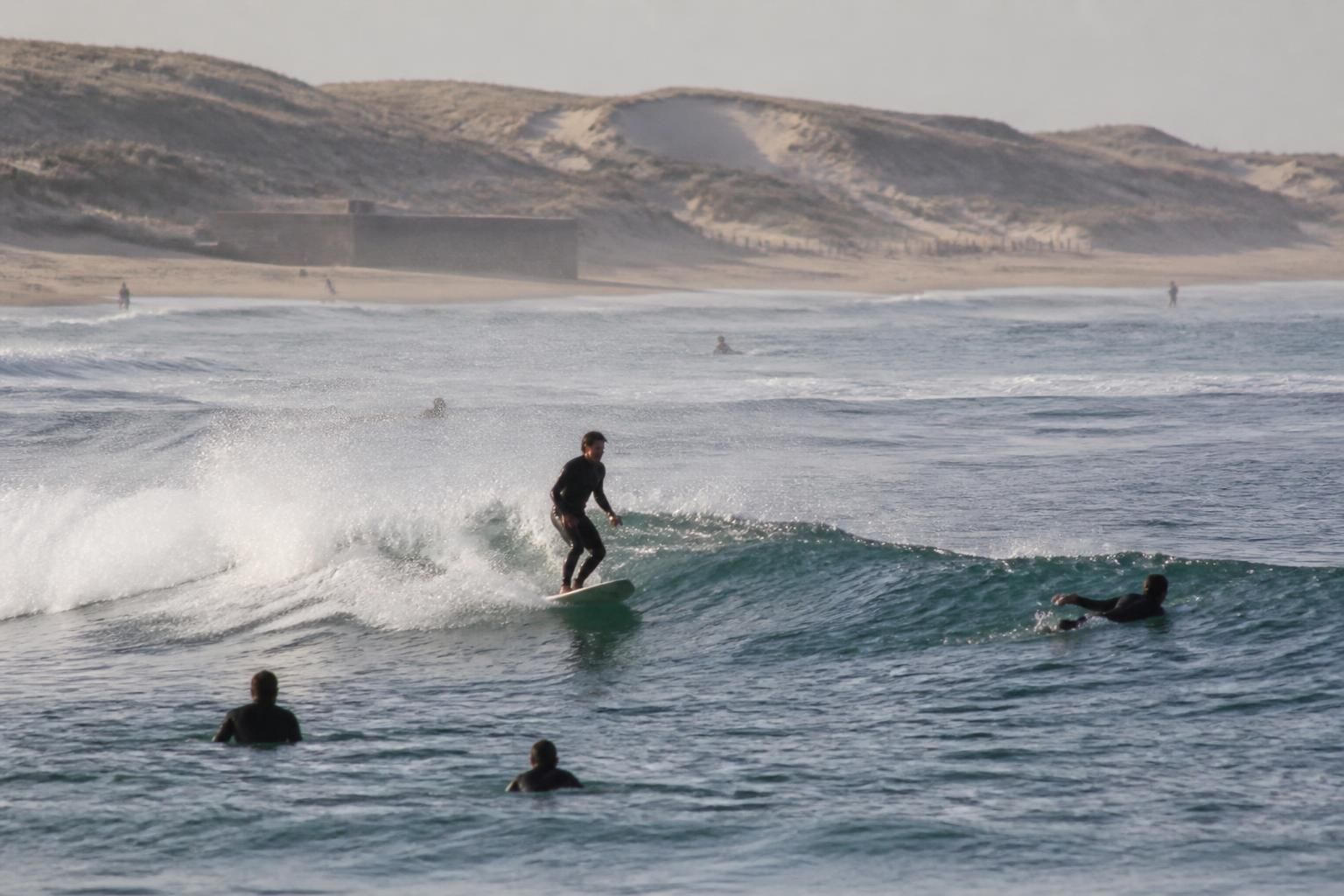
Summer is the most welcoming time to discover surfing in Hossegor. The water generally reaches its most comfortable temperatures between July and September, the beach atmosphere is lively, and surf schools are operating at full capacity. Small swells often dominate, which does not rule out a few bursts of energy, but they generally make learning easier on a high-volume board.
Beginners benefit from a complete offering: group lessons, foam board rentals, kids’ camps, shops with long opening hours, and supervision near lifeguarded areas. La Sud is regularly sought after for being more accessible, especially when it offers small waves at low tide. Les Estagnots can also provide interesting conditions depending on the sandbank at the time, but always ask for advice before getting in the water.
Crowds, thermal wind, and rules on a very busy beach
The trade-off is obvious: crowds. In the water, a surf spot is shared by people of all levels, some of whom may not be familiar with right-of-way rules. On the sand, swimmers, schools, walkers, and families mingle. Keeping a safe distance, never letting go of your board, and choosing an area suited to your level become even more important. 🏖️
Thermal wind often picks up late in the morning or during the afternoon. It ruffles the surface, makes the waves less clean, and can make learning more difficult. Morning sessions often offer a better balance: lighter wind, pleasant light, and water that is still calm. On a small summer swell, a large soft board catches more waves than a shortboard that is too small.
For an experienced surfer, summer does not necessarily mean bad sessions: a clean, even modest swell can be an opportunity to work on style, maneuvers, and positioning. However, those looking for barrels and consistent power will have to accept that the best time for that program is more likely after peak season.
Surfing Hossegor in September and October: the prime season for intermediate surfers
September and October often bring together Hossegor’s most sought-after qualities: the water remains relatively warm, summer crowds thin out, and swells become more consistent. Sandbanks shaped during the summer can, in some years, reveal precise, fast peaks. When a light easterly blows in the morning, the coastline takes on the crisp, glassy appearance that has made the Landes coast famous.
However, it would be unwise to portray fall as a season of automatic perfection. Conditions can become serious very quickly. A 1 to 1.5-meter swell with a 10- to 13-second period already brings significant energy to a beach break. With a 14-second period or more, the spaced-out sets catch you off guard, sections speed up, and paddling requires real commitment.
Who is fall in Hossegor for?
A solid intermediate surfer will find ideal terrain by choosing moderate days. They know how to get through the break, stay calm in a set, turn with control, and respect right-of-way rules. More experienced surfers, meanwhile, will wait for bigger days to explore powerful spots such as La Gravière or Les Culs Nus, always depending on the sandbank and tide.
Les Culs Nus is watched particularly closely between September and April. Its reputation for fast, hollow waves is no myth, but it requires humility and precision. The area’s name does not justify any special carelessness: shared-use rules, dune protection, and awareness of rip currents remain the same as everywhere else along the coast.
The right equipment makes all the difference. A board with enough volume helps you position yourself early on a powerful fall wave, while a more performance-oriented shape requires more paddling and timing. To prepare for this choice, the guide dedicated to surf equipment in Hossegor lets you compare the options based on the conditions you are targeting. Fall rewards reading the waves and positioning more than rushing. 🍂
Surfing Hossegor in winter: power, currents, and serious preparation
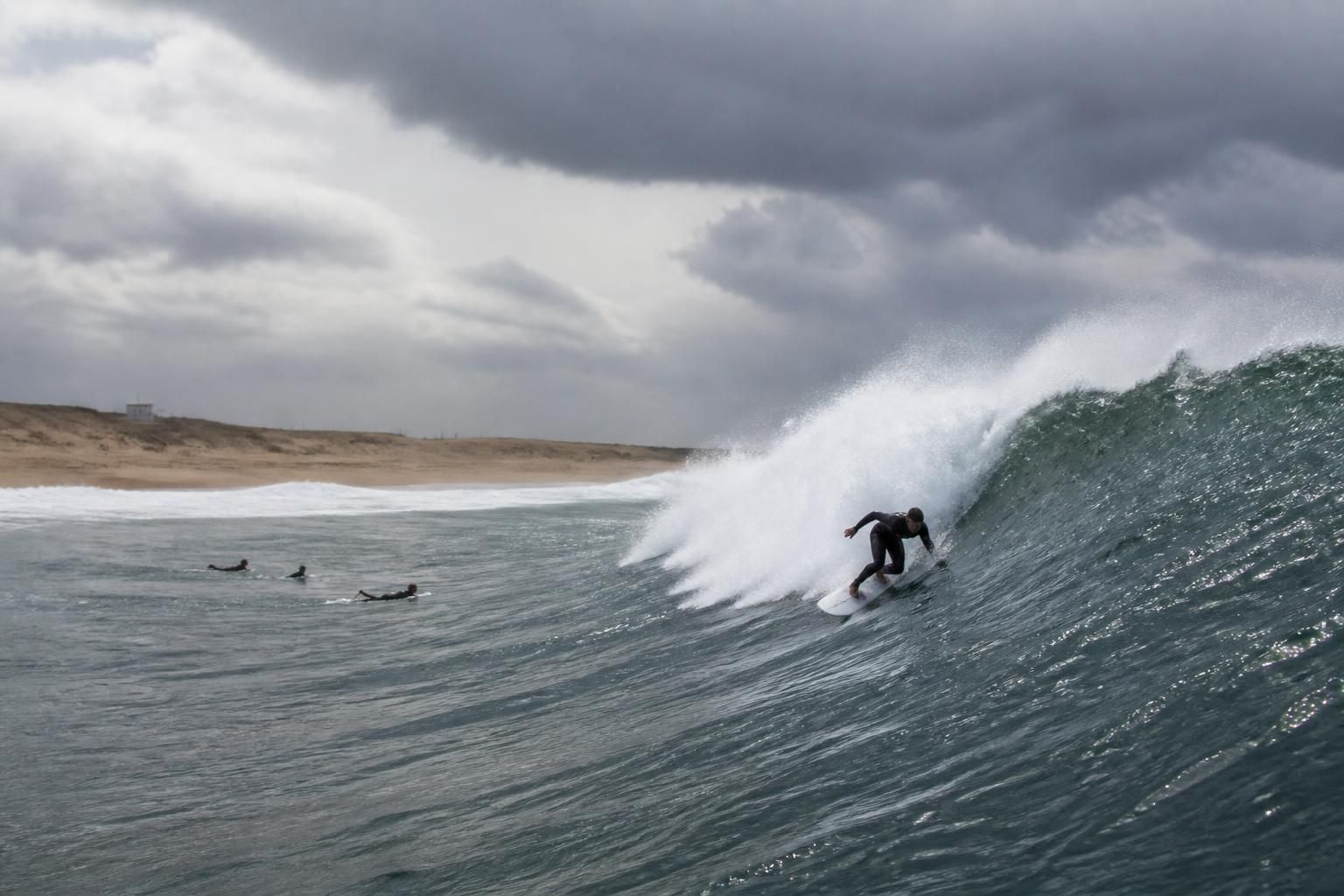
Winter is the season of big swells, long periods, and mornings when the ocean commands respect before you even enter the water. Hossegor can offer extraordinary waves, but they are rarely for beginners. Sets are heavier, the break is harder to get through, and currents can sometimes be very effective at pulling you out to sea or sideways.
La Nord is often mentioned when the surf gets bigger. This area can offer more space and a setup suited to certain big-swell days, without becoming a risk-free haven. Choosing the right board, understanding the breaking zone, and knowing your limits completely change the session. Those interested can read the advice on choosing a board to surf La Nord before aiming for these types of conditions.
Signs that suggest staying on the sand
An experienced surfer knows that a day that is too big is not a missed opportunity: sometimes, it is a day for observation. If sets close out across the entire beach, if no one is getting through the break cleanly, or if surfers are drifting quickly, the smartest decision is to sit it out or look for a more sheltered area. The beach remains an excellent observation point, with a camera or hot coffee in hand. ☕
Your wetsuit must be warm, well-fitted, and supplemented with booties or even a hood during the coldest spells, depending on the temperature. A future guide dedicated to wetsuits will help refine the thickness based on the season and individual sensitivity to cold. A leash, cold-water wax, and a careful equipment check before entering the water are non-negotiable.
Warnings about exceptional swells also deserve special attention; the mechanisms detailed in the cyclonic swell alerts for surfers remind us that an impressive swell is not an open invitation for everyone. In winter, the required level is measured as much by the ability to sit it out as by the quality of a takeoff.
Swell, wind, tide: choosing the right time beyond the season
The season provides a trend; the day’s conditions determine the actual quality. A west to northwest swell comes in well on Hossegor’s beaches. It can produce clean, powerful waves if the sandbanks are well positioned. A more northerly direction can increase lateral drift, while a very frontal swell can cause quick closeouts depending on the underwater terrain.
The tide does not follow a single formula. Many sandbanks work well at mid-tide, incoming or outgoing depending on their shape. At very low tide, waves can break hard and shallow. At high tide, some waves lose their shape or break close to shore. Still, a deep sandbank can work very well at high tide: you have to watch the water, not just the tide chart.
A simple observation method before a session
- 🔭 Watch the position of the peaks and the frequency of the sets for ten to fifteen minutes.
- 🌊 Identify the darker areas, channels, and drift direction of surfers already in the water.
- 💨 Check the water surface: smooth with light offshore winds, choppy with onshore winds.
- 🏄 Choose an area and board suited to your level, without automatically copying the best surfers there.
This method avoids a common mistake: entering where the waves are most photogenic, when a nearby area offers easier access and more consistent takeoffs. The baïnes can speed up your way out, but they require confidence in the current. A tired surfer should not rely on them like an escalator to the outside.
The best time slot for you
When to surf in Hossegor ?
This quiz provides an indication: always check the forecast, tides, and conditions of the day before getting in the water.
When forecasts predict a good window, regulars still keep an eye on the actual conditions. That is what separates a useful forecast from a good decision. The next section helps connect these factors to the practical planning of your stay.
Crowds, schools, and equipment: planning your stay by season
In summer, Hossegor is in full swing: surf schools, rentals, surf shops, and accommodations offer a wide range of services, even though reservations become necessary. Families appreciate the supervised beaches, entertainment, and range of activities when there are no waves. The downside is heavier traffic, crowded parking lots, and a busy lineup.
In fall and spring, the atmosphere becomes more focused on surfing. Some businesses and schools adjust their hours, but equipment remains accessible, especially in the most active areas. Outside school holidays, booking a private lesson or surf camp can offer greater flexibility. To rent or round out your equipment, the Hossegor surf shops are also good reference points.
Accommodations and transportation along the Landes coast
Hotels, vacation rentals, campgrounds, and surf camps suit a range of budgets. A group of friends may prefer a house to store boards and cook; a family may sometimes prefer accommodations near supervised beaches. Van travel requires more planning: overnight parking and wild camping are regulated, especially near the seafront and dunes. It is better to use authorized areas or choose suitable options inland.
Equipment availability also deserves consideration. At the height of summer, foam boards go quickly during the best time slots. In winter, finding a quality warm wetsuit and a board suited to powerful conditions becomes a priority. Bringing your own equipment offers independence, but renting lets you try a different volume or shape without overloading your trip.
Successful seasonal planning starts with your surfing level, then adapts to the services that are actually open and crowd-related constraints.
Profile × season table for choosing when to surf in Hossegor
This table offers useful trends, not a guarantee. Weather conditions, tides, and sandbanks can overturn the expected scenario. Beginners should always choose a time slot approved by a surf school or the lifeguards on the beach, while experienced surfers remain responsible for their choices even during a session known to be easy.
| Profile | Recommended period | What to look for | Things to watch out for |
|---|---|---|---|
| 🌊 Beginner | Summer, then calm spring | Small whitewater waves, warm water, active schools | Crowds and thermal wind |
| 🏄 Intermediate | Spring and moderate fall | More defined waves, technical progression | Currents, fast sections |
| ⚡ Advanced | Fall and select winter days | Power, long period, possible barrels | Breaking waves, heavy sets, fatigue |
| 👨👩👧 Family | Summer | Lifeguard-supervised beach, activities, kids’ camps | Book accommodations and lessons |
| 📷 Spectator | Fall or winter | A grand spectacle from the dune | Respect access points and weather conditions |
Those looking to get started will naturally choose July or August, ideally in the morning and with supervision. Those wondering when the waves are most powerful should aim for winter, without confusing a spectacle with conditions suited to their level. As for travelers drawn to the balance of still-pleasant water, ocean energy, and fewer crowds, September and October remain particularly appealing months.
Hossegor retains this rare character: the same beach can become an open-air school, a place to progress, or an amphitheater for big waves depending on the date and weather. The best choice is to adapt your stay to the ocean conditions of the day, never the other way around.
Which season should you choose to start surfing in Hossegor?
Summer is generally the easiest choice: small waves are more frequent, the water is more pleasant, lifeguard-supervised beaches are open, and surf schools offer plenty of time slots. A low-wind morning is still best for learning in better conditions.
When are the waves most powerful in Hossegor?
The biggest swells most often arrive between fall and winter. The energy can already be strong in October, then become very demanding from December through February. These conditions are for independent, experienced surfers.
Can you surf year-round in Hossegor?
Yes, you can surf year-round, but the type of session changes considerably with the seasons. Summer is ideal for learning, spring for getting back into it, fall for consistent waves, and winter for confident surfers seeking more power.
When is the water warmest in Hossegor?
The water is usually warmest in summer and early fall. It then gradually cools through winter and early spring, requiring a warmer wetsuit and sessions adapted to each person’s tolerance.