
In Hossegor, the choice between a surf camp and simple surf lessons is not simply a choice between a “full” package and a “light” option. It mainly depends on how you envision your vacation: a stay entirely focused on the ocean, a few sessions between outings in the Landes, specific technical progress, or simply the desire to get a taste of surfing. On this coast, where sandbanks shift, currents can pick up, and every tide reshapes the waves, the right option is the one that leaves enough room for safety, enjoyment, and the actual pace of your stay. 🌊
The Hossegor beaches welcome beginners in the most accessible areas of La Sud or Les Bourdaines, as well as experienced surfers drawn to the fast peaks of La Gravière, La Nord, or Les Culs Nuls. This diversity makes the destination wonderful, but it means looking beyond the listed price. A room in a surf house, meals, board rental, transportation to the beach, insurance, or a day without waves can significantly affect the final budget. The useful comparison is therefore not about naming a winner: it helps you book wisely, based on the length of your stay, your independence, your companions, and your progress goals.
Surf camp or surf lessons in Hossegor: understanding the options before booking
The term surf camp generally refers to a stay organized around surfing. It most often combines surf accommodation, several supervised sessions, suitable equipment, and a shared social experience. Depending on the provider, the package may also include breakfast, meals, yoga, transfers, bike rental, evenings, or video analysis. However, the word “camp” does not guarantee the same content everywhere: some stays are highly structured, while others are more like a shared house with lessons booked at an additional cost.
A surf house is primarily a place to stay: private rooms or dormitories, a shared kitchen, outdoor spaces, and opportunities to meet other travelers. It may offer packages with lessons, but accommodation remains its core business. A surf house is ideal for travelers who want to cook on some evenings, go out in Capbreton, visit Lake Hossegor, or decide at the last minute not to surf. By contrast, a course with accommodation is a more structured package: lodging and a set number of sessions are sold together for a specified period, often five to seven nights.
Group surf lessons lessons can be booked individually or as a package through a surf school. In Hossegor, groups are organized by age and ability when operations are well run. Equipment—wetsuit and foam board for beginners—is generally included. The time slot often lasts between one and a half and two hours, but this should be distinguished from the total time required: meeting up, getting equipped, walking on the sand, safety instructions, and returning equipment are all part of the lesson.
Private lessons follow a different approach. The instructor focuses on one person, a pair, or a small group of friends. They can adjust the board, the surf area, paddling and pop-up exercises, or guide an independent surfer toward a more nuanced understanding of the peaks. This option costs more, but it becomes worthwhile when time is limited, anxiety is holding back progress, or an intermediate surfer wants to work on a specific point.
Knowing what is included—and, above all, what is not
A stay advertised from a certain price should always be viewed as a combination of services. Overnight stays may be included without meals; lessons may be advertised without equipment outside scheduled time slots; yoga may be an option; and transfers from Biarritz may be unavailable. These are not necessarily traps, but differences in business models. Reliable surf booking starts with a written list of services, schedules, and additional charges.
- 🏄 What to check in a surf camp: exact number of lessons, student-to-instructor ratio, boards available outside lessons, linens, meals, and included activities.
- 🛏️ What to check in a surf house: room type, kitchen access, tourist tax, parking, noise rules, and actual distance to the ocean.
- 🌊 What to check with a surf school: included equipment, insurance, accepted skill level, meeting point, and weather rescheduling policy.
- 🚲 To budget separately: train or flight, shuttle, bike, car, parking, dining, additional rentals, and expenses for companions.
For a first stay, the key is simple: a full package avoids daily decisions, while lessons alone give you control over everything else. The right choice depends less on the marketing label than on the contract details.
Surf budget in Hossegor: comparing actual costs over the same period
Comparing a surf camp and separate lessons requires putting both options over the same length of time. Observable and verified 2026 rates from local providers put a group lesson at around €40 to €43 per 1.5- to 2-hour session, equipment included. Some options start at around €35, while private lessons often come close to €100 to €105 depending on duration, number of participants, and time of year. Renting a board and wetsuit can cost around €32 per day, a key factor when free-surf sessions are added to lessons.
As a benchmark, a week at a surf camp may show an attractive overall price because it combines accommodation, lessons, and on-site life. But a shared room, dormitory, or period outside school holidays cannot be compared with an independent studio apartment in the heart of the resort. To be fair, you need to compare like for like: the same duration, the same type of accommodation, the same meals, and the same amount of supervised surfing.
| 5-day / 4-night package | Cost details | Common add-ons | Useful takeaway |
|---|---|---|---|
| 🏄 Group lessons + independent accommodation | 5 sessions: around €200 to €215; accommodation, meals, and transportation extra | 🚲 bike, parking, rentals outside lessons, insurance | Highly flexible if accommodation is already booked or shared |
| 🌊 5-session package with accommodation | Package varies by room and season | 🍽️ meals not included, tourist tax, arrival | Easy to understand if the included items are clearly stated |
| 🏡 Weekly surf camp | Overnight stays + several lessons, sometimes meals and activities | ✈️ transportation, extras, personal expenses | Often a good deal for a solo traveler looking for a fully organized experience |
| 🎯 Private lesson + independent accommodation | Around €103 per private session, excluding accommodation | Free-surf board rental, transportation, dining | Worthwhile for targeted coaching or a very short stay |
Real-life example: Léa and Thomas are coming for four nights with the idea of surfing three times, but Thomas also prefers cycling and exploring local markets. A surf camp may be a good deal for Léa if the lessons, bed, and meals match her plans exactly. For Thomas, pay-as-you-go lessons and independent accommodation will avoid paying for an immersive experience he will only partly enjoy. The couple can also book the same accommodation and choose different surfing options.
Food costs deserve special attention. A package with a shared kitchen can reduce the daily surf budget without locking the stay into a meal schedule. Conversely, included breakfasts and dinners make the price more predictable, which can be reassuring on a first solo trip. So the question is not “is a surf camp worth it?”, but for whom, over how many days, and with what level of services actually used?
Surf vacations in Hossegor: independence, schedules, and freedom of movement
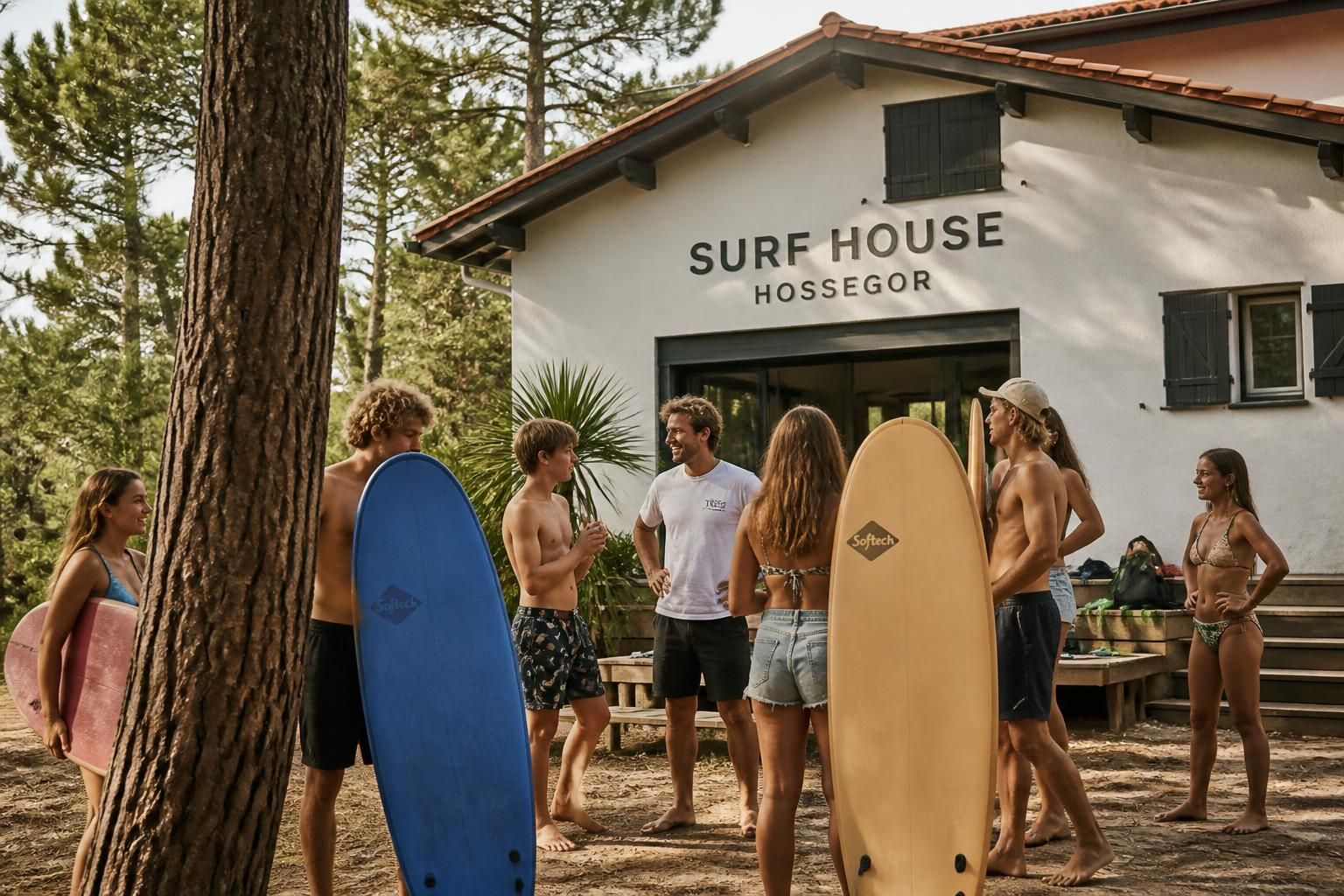
Lessons booked separately are the most flexible option for surf vacations where surfing is not the only activity. You can choose a morning session, have lunch by the lake, spend the afternoon visiting Bayonne, or keep an entire day for non-surfing companions. This flexibility matters greatly for families, couples with different preferences, and travelers dealing with changing weather.
A surf camp provides more structure for daily life. This framework brings comfort: a set meeting time, equipment ready to go, an established group, and advice each evening on the next day’s tides and conditions. It also reduces wasted time, especially for beginners who do not yet know where to position themselves or which spot is suitable. But you have to accept that planned meals, activities, or sessions will take up part of the stay. Some packages allow you to miss a lesson without penalty; others follow a more fixed group program.
Spot selection and transportation constraints
In Hossegor, walking to the ocean may take five minutes from some accommodations, twenty-five from others, or even require a car. Proximity is no small detail: carrying a foam board, dealing with a wet wetsuit, or returning after a tiring session quickly becomes less enjoyable when you have to cross the entire resort town. Surf accommodations near La Sud make learning easier, but a place near the lake may be better suited to those looking for peace and quiet, restaurants, and activities beyond the beach.
A car gives access to Seignosse, Capbreton, and nearby areas when wind or tides require changing beaches. However, it also means traffic and parking, especially in July and August. A bike is very practical on bike paths for reaching Hossegor’s beaches, but less suitable for transporting large boards without a trailer. A camp shuttle simplifies this logistics, provided you check its schedule and covered destinations.
Independent surfers have an advantage with standalone lessons: they can add a personal session to a lesson when they have the equipment and the instructor’s approval for the safe area. For novices, this freedom must remain supervised. The beach breaks in Landes change quickly; a channel present in the morning may close in the afternoon, and the lateral current can sometimes require getting out of the water farther away than expected. A good surf school does not promise surfing everywhere: it moves or adjusts the area based on safety.
To prepare for an occasional session, check the information provided on surf conditions in Soorts-Hossegor helps you understand that a spot is never chosen based on a static photo. Freedom is valuable, but it is more enjoyable when it is grounded in a realistic reading of the ocean. Standalone lessons encourage spontaneity; camp reduces the organizational effort.
Progressing at a surf camp or surf school: intensity, consistency, and video
Progress is not measured only by the number of waves caught. It depends on repetition, fatigue, the quality of feedback, and the ability to understand what happens between sessions. A single lesson can trigger a major breakthrough: your gaze is better positioned, your feet find the right placement, and the pop-up becomes more explosive. Yet without repetition over the following days, the movement remains fragile. Courses of three to five sessions already create highly effective continuity without requiring a full stay.
A surf camp adds an immersive dimension. When the same instructor sees participants every day, they can more easily identify a recurring issue: hands too far forward during the pop-up, eyes fixed on the board, attempting to take off too late, or a tendency to position themselves in a current zone. The next day, the exercise changes, the board can be adjusted, and the instruction becomes precise. This continuity is especially useful for beginners, because reference points are built quickly but lost just as quickly.
However, it would be excessive to claim that a camp automatically ensures better progress. An excellent course booked at a school offering surf lessons in Hossegor, with several closely spaced sessions, can provide remarkable support. Conversely, a very busy group stay, with too many students in the water and little personalized feedback, will not replace attentive instruction. Ask about the maximum number of people per instructor, whether an assessment is offered, and the possibility of being placed in a different group.
Video analysis, recovery, and real conditions
Video analysis is an interesting tool when it serves a concrete purpose. Seeing a take-off from the side makes it possible to spot a stance that is too high or a late weight shift. Its value lies in moving beyond mere impressions: surfers sometimes think they are turning their shoulders, while the video shows a rigid body line. At a camp, this can support an evening debrief; in a private lesson, it can focus on a specific difficulty. It is not essential for initial learning, but it is a real accelerator once the basics are in place.
Recovery also matters. Five consecutive days of paddling and pop-ups put strain on the shoulders, lower back, and thighs. A smart program includes varying intensities: a gentle session in the whitewater, positioning work, mobility, observation from the beach, or rest. Yoga and stretching are not merely decorative extras if they aid recovery; nor should they make you forget that getting enough sleep, drinking, and eating remain the main drivers.
Hossegor can offer small summer waves suited to learning, but also much more powerful fall sets. Between September and November, the consistency of west to northwest swells attracts experienced surfers. For a beginner, a week planned in the heart of fall must therefore include real adaptability: a schedule change, a more sheltered spot, theory, bodyboarding, or postponement. The best format for progress is the one that keeps learning going even when the ocean does not allow the original plan to be followed.
Which surf format in Hossegor might suit you?
Adjust your priorities, then compare the options. The result is indicative: prices, services, and conditions vary depending on the season and the school chosen.
Calculating your comparison…
| Criteria |
|---|
Explore an option
Click on an option’s name in the table to read its points to consider.
The amounts are general guidelines, per person. Always check what is included: number of sessions, rentals, insurance, meals, transfers, and weather conditions.
Atmosphere and traveler profiles: which surf trip is right for solo travelers, couples, families, or groups of friends?
The human side carries significant weight in the decision. A solo traveler finds a simple answer in a surf camp to two classic challenges: not knowing the town and not having a surf partner. Shared meals, group trips to the beach, and post-surf conversations create a welcoming setting. This sense of community also appeals to adults returning to the sport or looking for an active week without having to organize every detail.
For a couple, the right format rarely depends on the skill level of the only surfer. If both want to learn and enjoy communal living, the camp can become a shared experience. If one wants to surf a lot and the other wants to alternate between the market, spa, bike rides, the lake beach, and reading, an apartment or hotel with separate lessons helps avoid tailoring the trip to just one person. The hybrid option works very well: independent accommodation, a three-lesson package for one person, and an introductory lesson for the other.
Groups of friends often appreciate group lessons booked in advance, then keep the rest of their days open. They can choose their restaurants, plan an outing to Capbreton, or enjoy the nightlife without schedule constraints. In this case, make sure the group is at a similar level. Mixing a complete beginner with a surfer aiming to perform maneuvers on unbroken waves does not always make for a satisfying session; booking two simultaneous levels with the same surf school avoids frustration.
Children, teens, and adults: safety before format
For children, proximity to the school, the group’s age range, supervision ratio, and arrival arrangements matter more than a camp’s image. Young people need stable equipment, simple instructions, breaks, and an area where they can stand or surf in highly controlled conditions. A half-day children’s surf camp is often better suited to a family staying in a rental than a full group trip. Useful tips are available to prepare for a children’s surf camp in Hossegor, particularly regarding pacing and precautions to check.
Independent teens may enjoy a camp: they meet other young people, surf daily, and gain confidence without parents having to drive them to the beach. The question to ask then concerns supervision outside lessons. Is the accommodation supervised? Are outing rules clear? Are meals organized? An adults-only camp does not necessarily provide the right environment for a minor, even if water sessions are well supervised.
Lastly, beginner adults should not be intimidated by Hossegor’s reputation. La Gravière is world-famous for its powerful barrels and professional circuit competitions, but it is not where a novice should try to prove anything. The southern areas and the time slots chosen by instructors offer gentler waves. The right atmosphere is one where everyone can progress at their own pace, without performance pressure.
Length of stay: weekend, five days, or a full week of surfing in Hossegor
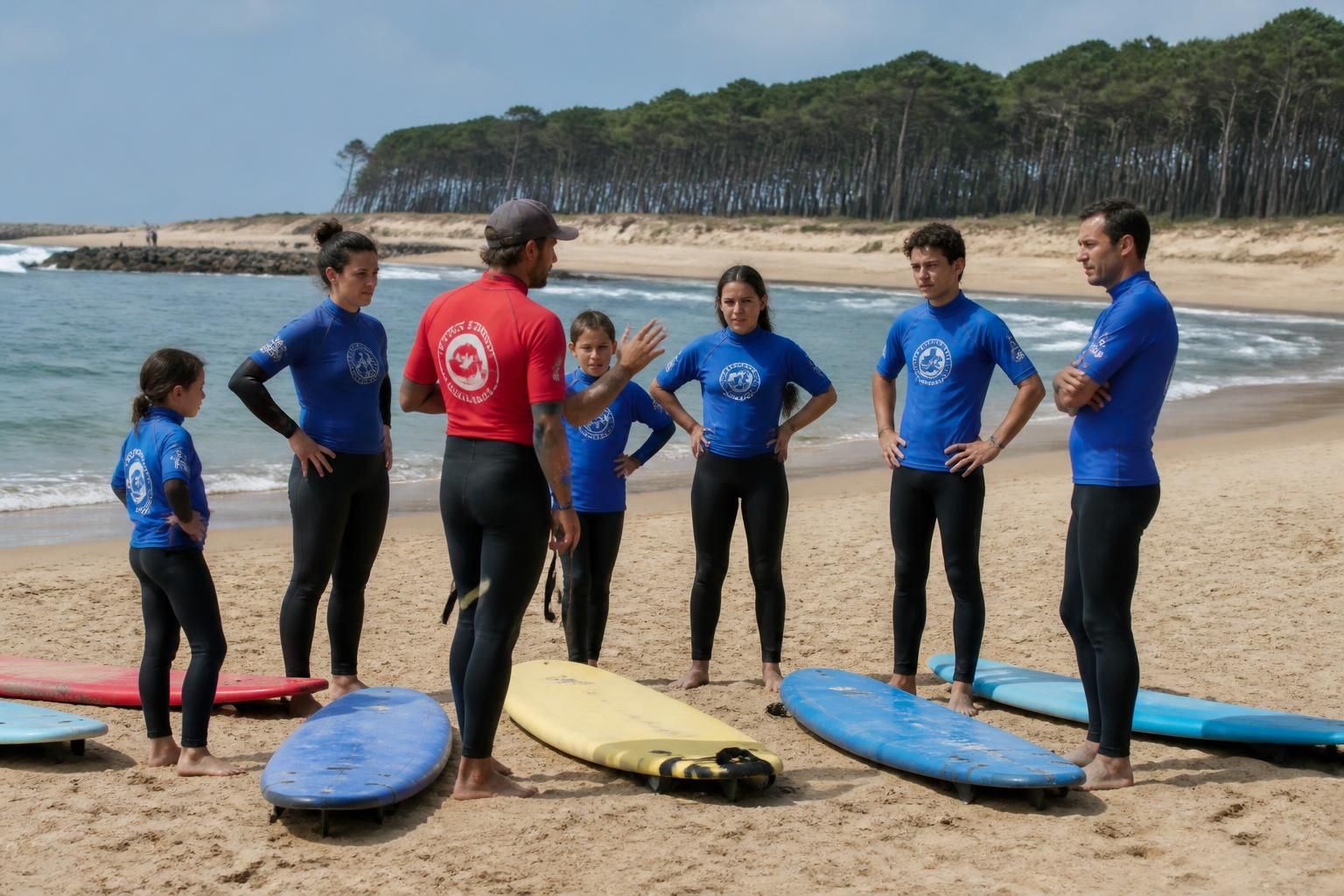
A weekend is perfect for an introduction. With one session on Saturday and another on Sunday, participants can test the sensations, discover paddling, priority rules, and their first takeoffs in the whitewater. Booking a surf camp for just two nights can be convenient if the goal is also to meet people, but its overall cost should be weighed against actual use of the services. Separate lessons will often make more sense for a short getaway, especially if accommodation has already been chosen.
Over five days, the course really comes into its own. Three to five sessions scheduled around the tides help establish good habits, correct early mistakes, and leave a day for recovery or sightseeing. This length is an excellent balance: long enough to feel progress, yet flexible enough to enjoy a real vacation. People who do not want to surf every day can choose three supervised lessons, then devote the other time slots to watching the waves, biking, or relaxing.
A full week encourages immersion. A surf camp can then become more cost-effective, as accommodation, lessons, and logistics are combined. Progress benefits from group interaction and daily exposure to surf culture: reading forecasts, discussing the tide, learning about equipment, and understanding priority rules. But a longer package does not mean going into the water morning and evening. The body needs recovery, and days with overly powerful waves are sometimes better spent analyzing, walking on the beach, or visiting the surrounding area.
For someone who is already independent, a week in a rental with a few private lessons can be more strategic. They retain the freedom to surf alone when conditions are easy, while booking coaching during an interesting tide. This model avoids paying for daily supervision that has become unnecessary, without giving up a professional’s outside perspective. The page dedicated to booking lessons in Hossegor can help identify the available formats depending on skill level and time of year.
It is also useful to distinguish between summer and fall. In summer, water around 20°C and often more manageable waves make learning easier, even though beaches are busy. In fall, swells become more powerful and consistent; a longer week is then useful for waiting for the right window, but it requires more flexibility. The ideal length is one that leaves room for the ocean’s uncertainties, not one that fills every hour of a schedule.
Weather, insurance, and cancellations: the conditions to read before booking a surf camp
The weather during a surf trip is not just about rain. The key factors are swell size and period, wind, tide, current, crowds, and the quality of the sandbanks. It is entirely possible to surf in light rain if sea conditions are suitable; conversely, bright sunshine does not make a session safe when waves are closing out, sets are too powerful, or the current pulls you toward a difficult area.
Before booking, ask what happens when a session cannot be held. A reputable provider may offer to reschedule for another time slot, a replacement activity, a credit, an alternative session in a more sheltered location, or, depending on its terms and conditions, a refund. These policies vary widely. The word “weather” can sometimes refer to a cancellation made for safety reasons, sometimes to the client being unable to attend, or sometimes simply to less pleasant conditions than expected. The terms should therefore be written down and understood before payment.
Practical questions that help avoid unpleasant surprises
At a camp, it is essential to check the policy for nights already used and canceled activities. A week sold as all-inclusive may still include accommodation and meals even if two lessons are rescheduled: this does not mean the trip loses all its value, but travelers should know what they are buying. For lessons only, asking how long a credit is valid can make all the difference, especially for visitors leaving on Sunday evening.
Insurance also deserves careful reading. Some schools include coverage related to supervised activities; others require additional insurance. It does not necessarily replace travel insurance, repatriation assistance, or personal liability coverage. Those renting equipment outside lessons should check the deductibles for breakage or loss, as well as return policies in the event of a sudden change in conditions.
- 📋 Read the rescheduling terms before paying a deposit.
- 🌊 Ask who decides on cancellation and which safety criteria are used.
- 🩺 Check insurance coverage during lessons and independent rentals.
- 🚗 Plan transportation if the spot is moved to a nearby beach.
- 📞 Keep a contact number you can reach that morning to confirm the meeting point.
An organized trip does not eliminate ocean-related uncertainties; it makes them easier to manage when the rules are transparent. The best guarantee is not a promise of waves, but a clear policy when conditions require a change of plans.
Decision table: choosing between a surf camp, a surf program with accommodation, and lessons only in Hossegor
The following table does not offer a definitive verdict. It matches common situations with suitable options, then highlights the key consideration for adjusting the decision. Needs vary depending on the season, age, number of people, and experience in the water. The same traveler may prefer lessons only for a weekend and a surf camp for a solo week.
| Profile or situation | Often suitable option | Why | Key consideration |
|---|---|---|---|
| 🧍 Solo traveler for a week | Surf camp or surf house with a lesson package | Meeting people, less logistical planning, group sessions | Room type, meals, guest age range, and instructor-to-student ratio |
| 👫 Couple with only one dedicated surfer | Independent accommodation + lessons or focused coaching | Each person keeps their own vacation schedule | Distance to Hossegor beaches and options for the accompanying person |
| 👨👩👧 Family with children | Family rental + children’s surf program | Flexible pace, easy breaks, suitable organization | Accepted age, learning area, supervision out of the water |
| 🧑 Beginner level over five days | Progressive program or small-group camp | Useful repetition and stronger fundamentals | Number of actual lessons and rescheduling options |
| 🏄 Independent intermediate surfer | One-off private lesson + free sessions | Precise technical work without a set program | Access to equipment, spot advice, and safety guidance |
| 🎉 Group of friends on a weekend getaway | Group lessons booked separately | Clear budget and freedom for the rest of the stay | Suitable skill-level grouping and schedules |
| 🌦️ Off-season trip with uncertain weather | Flexible option with clear rescheduling terms | Conditions may require adjustments | Credit, refund, and alternative activity |
To finalize your choice, three questions are often enough. How many sessions will actually be taken? How much independence do you want between sessions? Will the included services—accommodation, meals, equipment, transfers, and social activities—actually be used? If the answers point to a week centered around the ocean, a surf camp makes sense. If they prioritize outings, accompanying guests, and an à la carte program, separate lessons are more suitable.
Hossegor offers enough variety to avoid forced choices: group lessons, private lessons, multi-session courses, surf houses, and organized stays coexist in a compact area. The best approach is to compare services on an equal basis, factor in transportation, and set aside a budget for unexpected expenses. A successful booking leaves as much room for progress as for enjoying the Landes at your own pace.
Is a surf camp worth it in Hossegor?
It can be for a stay of several days if the accommodation, lessons, equipment, and included services genuinely match the planned itinerary. For a weekend, independent accommodation and two separately booked lessons may cost less and offer more flexibility.
Can you book surf lessons only in Hossegor?
Yes. Schools usually offer individual group lessons, lesson packages, multi-session courses, and private lessons. Equipment is often included during the session, but rescheduling terms, insurance, and the exact duration should be checked.
Which option should you choose to improve quickly at surfing?
A course with several closely spaced sessions or a surf camp with daily guidance encourages repetition and corrections. A private lesson may be more effective for addressing a specific technical obstacle. The quality of instruction and adaptation to conditions matter more than the name of the package.
What should you choose if you do not want to surf every day?
Separate lessons or a package of three to five sessions combined with independent accommodation are often a better fit. This arrangement leaves time for the lake, bike paths, markets, and non-surfing companions without paying for unused activities.
Can beginners surf in Hossegor?
Yes, provided they go through a surf school and surf in the areas selected by instructors, especially around La Sud or Les Bourdaines depending on conditions. Spots such as La Gravière, La Nord, or Les Culs Nuls can be powerful and require more experience.