
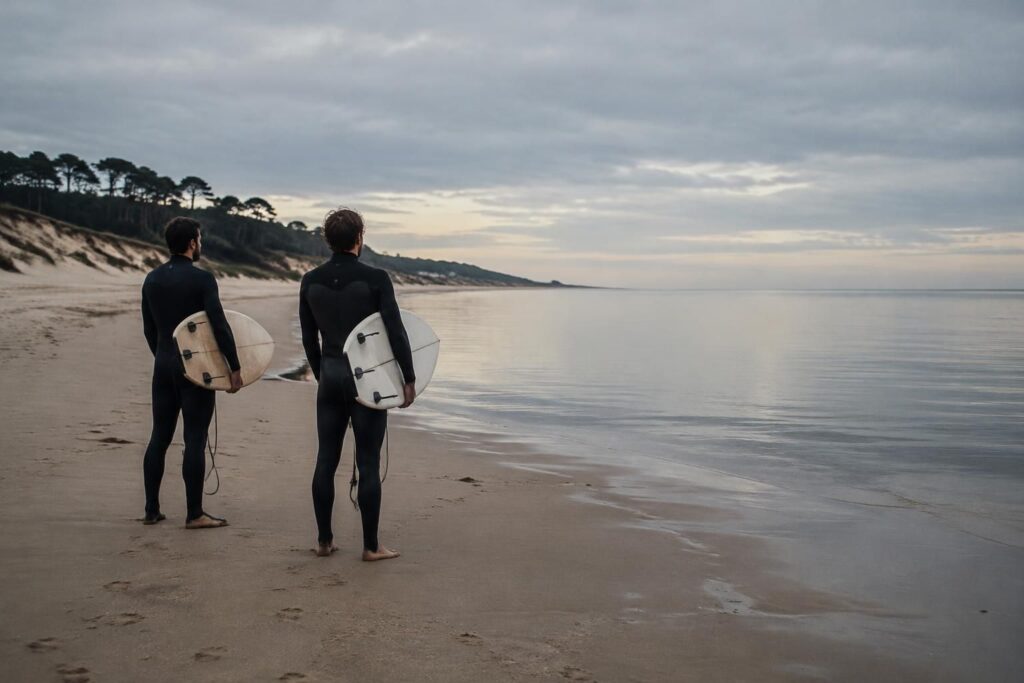
Above the Arctic Circle, the members of Lost in the Swell set out in search of an untouched wave, far from established spots and comfortable sessions. In their film The Reign of Snow, the three Breton surfers recount an expedition where cold, navigation, and patience mattered as much as the takeoff.
Lost in the Swell Searches for an Unprecedented Wave in the Arctic
Ewen, Ronan, and Aurel built their adventure around a goal that was as simple to state as it was difficult to achieve: finding a wave that had never been surfed before. For these swell explorers, it was not just about checking off a new spot, but about dealing with an isolated environment, changing conditions, and demanding logistics.
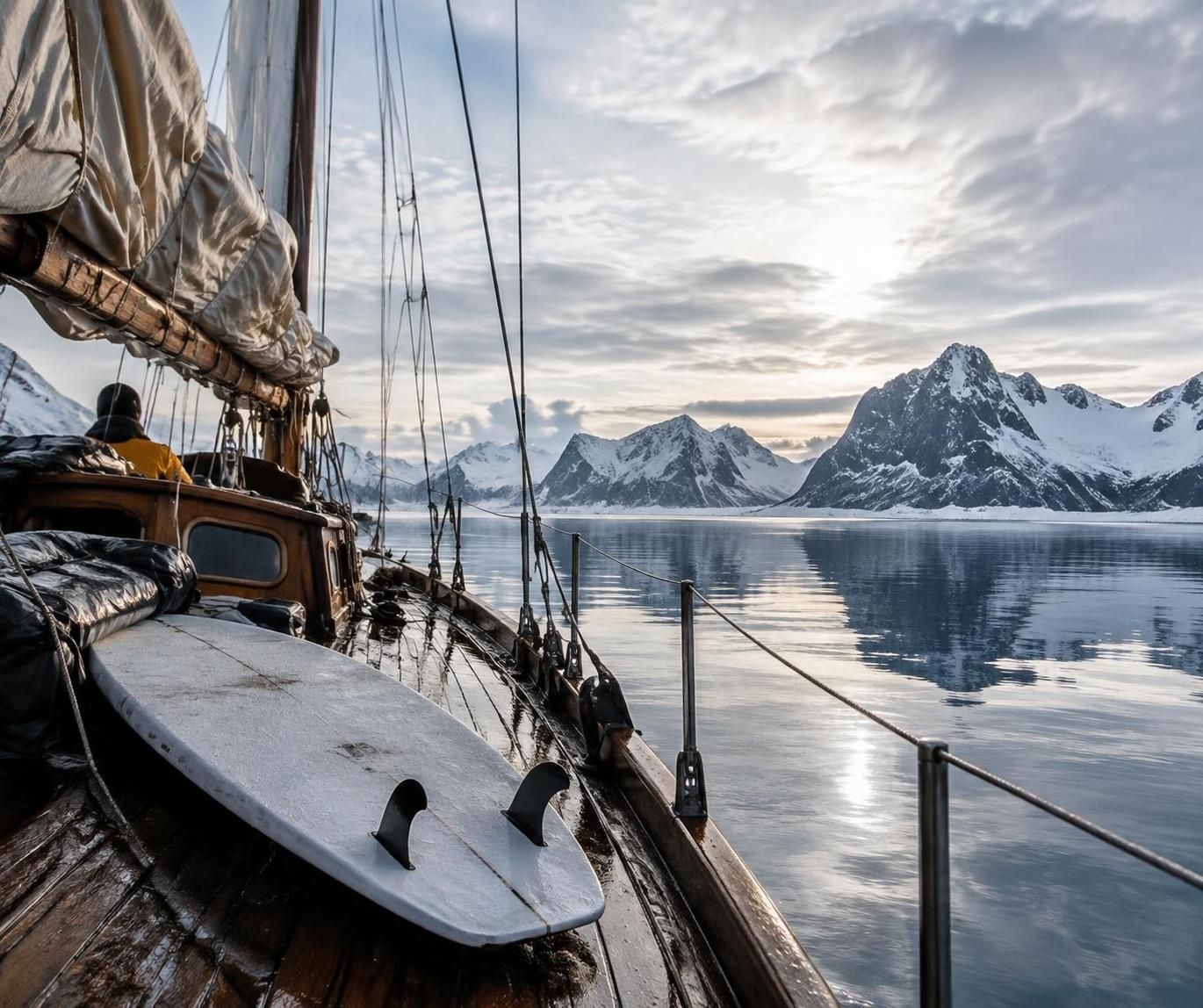
The trio set course for the Arctic Circle aboard an old sailing vessel. The expedition, carried out in the North Atlantic, lasted around forty days according to the account presented around the film. Here, reading the water begins long before putting on a wetsuit: first, you have to reach the right stretch of coast and find a usable weather window.
An Extreme Surfing Challenge Between Cold Water and Sailing
The images and story of The Reign of Snow show an adventure where the sea sets the pace. With water said to be around 3°C, every paddle-out requires serious preparation: suitable gear, limited exposure time, and close attention to fatigue. At these latitudes, extreme surfing is not just about charging a heavy section; it starts with managing the cold and the risks.
Sailing is also part of the challenge. On board, the Breton surfers have to learn to live with the boat’s constraints and observe the ocean before choosing their approach. A promising swell is not enough: the wind, tide, and access to the spot must also align. A session is often won before the first paddle stroke.
The Reign of Snow: An Exploration Guided by Patience
The search for an unprecedented wave relies on a series of decisions rather than a single spectacular moment. Scouting a coastline, assessing wind exposure, waiting for a window, then checking the seabed: each step reduces uncertainty and prevents confusing a beautiful swell with a real surfing opportunity.
This approach recalls the work of a surfer discovering a new sandbank in the Landes. In Hossegor, the tide can turn a clean right-hander into a closed-out peak; in the Far North, distance and cold add other factors to the briefing. To better understand the influence of timing on a session, the reference points on the tide in Hossegor clearly illustrate this fine reading of conditions.
The Steps That Make a Session Possible
On this type of expedition, the desire to surf cannot dictate the schedule on its own. The team must align sea conditions, safety on board, and everyone’s physical capabilities. This discipline takes nothing away from the enjoyment; on the contrary, it allows them to be ready when the right window appears.
- Observe the swell and wind to identify an area likely to work.
- Assess access to the spot and the constraints related to the boat and coastline.
- Prepare cold-weather gear before entering the water.
- Wait for a safe window rather than forcing a session in poor conditions.
For a surfer used to beach breaks, this patience may seem counterintuitive. Yet on an expedition, knowing when to skip a mediocre session is simply common sense; it also leaves a chance for the real window.
A wave never surfed before, but a collective adventure
The project is not based solely on individual performance. With three people, tasks must be divided, decisions shared, and a positive dynamic maintained despite the isolation. This human dimension gives the expedition its depth: surfing remains the common thread, but navigation and life on board take center stage.
The table summarizes the main ingredients of this adventure, as they emerge from the story surrounding the film. It shows why discovering an untouched spot requires far more than a good paddle.
| Element | Role in the expedition | What it means for surfing |
|---|---|---|
| The old sailing vessel | Makes it possible to reach remote areas | Provides access to little-visited coastlines |
| Weather and swell | Guide travel and waiting times | Determine the quality and safety of the session |
| Cold water | Requires constant preparation and vigilance | Reduces time spent in the water |
| The team | Makes navigation and shared decisions possible | Makes it possible to approach the spot methodically |
Like many surf projects, this expedition reminds us that a successful adventure depends as much on cohesion as on conditions. The parallel with the passion for surfing in Landes is clear: the setting changes, but attention to the ocean remains the foundation of every session.
From the Breton coast to spots around the world
Originally from Brittany, Ewen, Ronan, and Aurel have made the search for waves and travel their signature. Their approach is part of a culture of exploration where self-reliance, curiosity, and embracing the unexpected matter as much as skill in the water. Returning home then takes on a special flavor: after the vast cold expanses, the familiar landmarks of the Breton coast regain their full significance.
This connection to place can also be found in the stories of surfers who reconnect with their home waves after a long break. The article on returning to surfing in Brittany bears witness, in a different way, to a lasting attachment to spots and their community. For Lost in the Swell, exploration broadens the horizon without erasing their roots.
Questions about Lost in the Swell and their unprecedented challenge
Who are the members of Lost in the Swell?
Lost in the Swell is a trio of Breton surfers made up of Ewen, Ronan, and Aurel, known for their wave-hunting expeditions and adventure films.
What is the film Le Règne des neiges about?
The film tells the story of an expedition above the Arctic Circle, undertaken to explore isolated coastlines and attempt to surf a wave that has never been surfed before.
Why is this expedition considered extreme surfing?
The challenge combines navigation in an isolated environment, very low temperatures, and sessions dependent on precise weather windows. Water at around 3°C requires thorough preparation.
How long did the adventure in the North Atlantic last?
The project presentation materials mention an expedition of around forty days in the North Atlantic.