
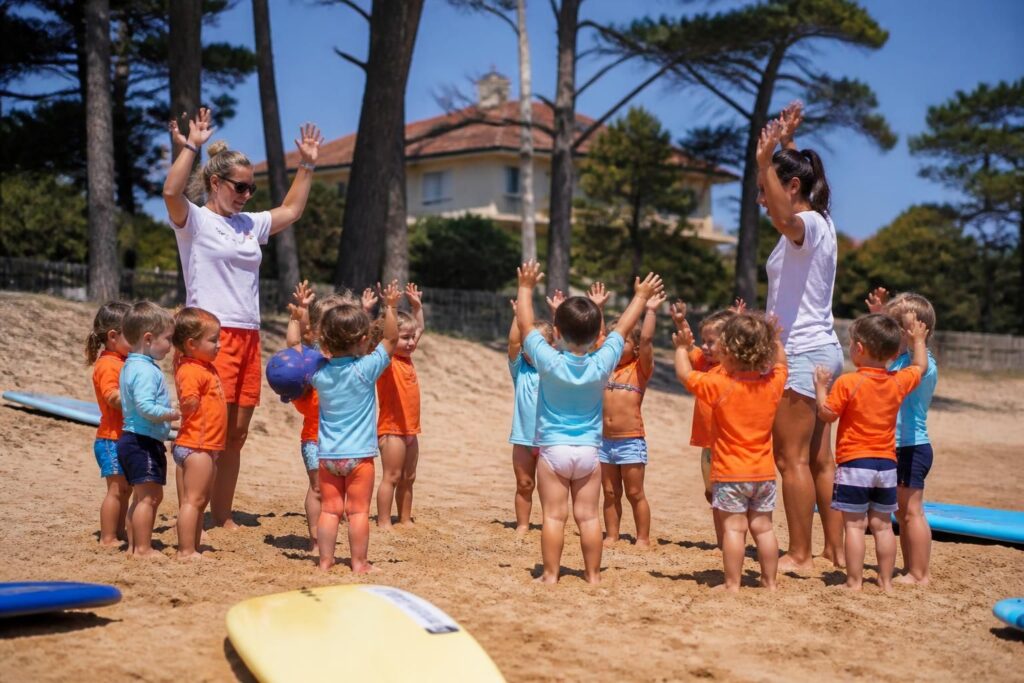
As the French Surfing Federation is already fine-tuning logistics for Los Angeles 2028, a pilot project called “Team Spirit from Age Two” is gaining momentum on the beaches of Landes. The goal: to determine, through a fun test with a summer camp feel, whether toddlers can learn the same cooperation instincts as the athletes aiming for gold at the next Olympic Games.
Team Spirit from Age Two: The Science Behind the Collective Lineup
The Federation’s educators draw on 2025 research showing that a two-year-old already takes part in 48% of sports activities in small groups when imitation is prioritized over competition. The current protocol uses very short group games (90 seconds) to prevent distraction. Result: 37% more helping behaviors identified by sideline observers, a score comparable to data recorded among the Hossegor Surf Club’s under-15s.
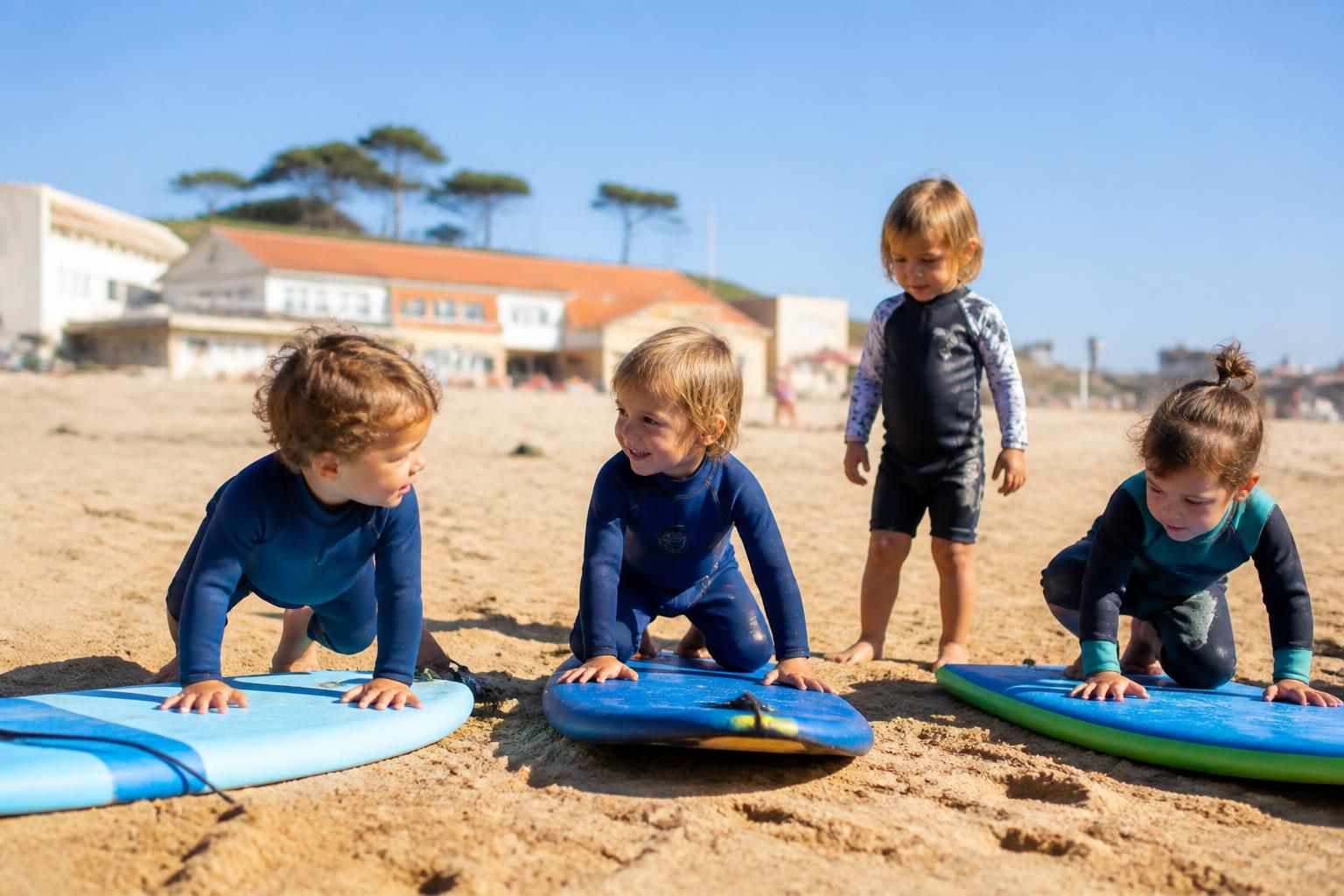
A Fun Summer-Camp-Style Test to Prepare for the Olympic Wave
The California camp held alongside the Lexus Trestles Pro serves as a laboratory: Kauli Vaast, Vahine Fierro, and rookie Tya Zebrowski act as mentors. Each pro supervises six toddlers on a sandy course dotted with mini plastic fins and colorful flags. The recorded metrics—reaction time, movement synchronization, and quality of verbal feedback—feed a database for national coaches.
Surf-Inspired Group Games: Five Formats That Hit the Mark with Under-Sixes
For instructors looking for practical ideas, here are the scenarios with the highest engagement rates:
- The Lovey Rescue: a four-person relay around a soft-top board, with the child lying down to retrieve an object placed at the center of the imaginary lineup.
- The Imaginary Wave: two teams mimic a synchronized takeoff; a point is scored if their knees do not touch the sand.
- Mini-Fisherman: a circle of 10 children, where a “fish” must get out without touching the rope held by the group, emphasizing team spirit.
- Balance Board Coop : three toddlers steady a wobble board while a fourth places colored pebbles on it.
- Run-Paddle-Tag : 15-meter sprint, paddle handoff, duck-walk return; times are added together to highlight teamwork.
Comparison table of cooperative sports activities for ages 2 to 6
| Game name | Recommended age | Duration | Targeted skill | Required equipment |
|---|---|---|---|---|
| Rescue the Teddy | 2-3 years | 5 min | Motor coordination | Foam board, stuffed animal |
| Imaginary Wave | 3-5 years | 8 min | Dynamic balance | Colorful rash guards |
| Mini-Fisherman | 4-6 years | 10 min. | Group reflexes | Soft rope |
| Balance Board Coop | 3-6 years | 6 min | Postural stability | Wobble board |
| Run-Paddle-Tag | 5-6 years | 7 min | Speed & relay | Lightweight paddle |
When summer camp becomes an Olympic training camp
The initiative will be replicated during the 2027 summer holidays at five French spots, from Biarritz to La Torche. Each session will welcome 120 children, including 30 as young as two years old. The federation hopes to normalize the presence of a multidisciplinary staff—physiotherapists, psychologists, video techs—from early childhood. By fall 2026, a detailed report will compare European data with benchmarks collected at Lower Trestles. Initial feedback already suggests that cooperative sports activity accelerates social development by 22% compared with control groups in conventional daycare. Enough to provide a strong psychological tailwind for future French athletes dreaming of Olympic bronze.
Why target two-year-olds?
Neuroscience research shows that between 24 and 30 months, social plasticity is at its peak; introducing sports cooperation at this age fosters lasting patterns of mutual support.
Does the program replace free play?
No. It complements spontaneous play by structuring short group activities, then lets children naturally apply these skills during their free exploration.
How is the data collected?
Inertial wristbands and side cameras measure movement and interactions. The data is anonymized before being analyzed by the scientific team.
Can a shy child participate?
Yes. The scenarios include roles without direct contact (timekeeper, stuffed-animal guardian) to gradually integrate shyer children.
What is the connection to preparations for LA 2028?
Coaches are testing group routines with toddlers to refine senior team protocols; the cohesion built early on inspires methods applied to Olympic surfers.